
Think about everything your wood fence handled this summer: pool days, a dog running the yard, keeping the kids contained while they played outside. That fence works hard, and by the time fall arrives it can be showing the resulting wear and tear. Whether your fence took a beating during this year’s storms or is simply worn down by heat and humidity, you may be facing a short list of repairs to make this fall. Wood fence repair can mean replacing a section or two, swapping a handful of boards, or adjusting a gate.
Whatever the scope, the Frederick Fence team can get your fence ready to handle winter.
What Summer Does to a Wood Fence
Summer in Maryland is hard on wood fences, and every season brings its own mix of stress. Some years bring low humidity and light rain; others bring 100-degree days and a storm every weekend. As a natural material, wood responds to all of it.
Common signs of summer damage include:
- Warping, twisting, cracking, or splitting boards from heat and UV exposure
- Loosening panels and hardware after high winds or storms
- Sagging or misaligned gates that won’t latch or stay closed
A gate that won’t latch is more than an inconvenience: It’s a safety concern for pets and kids who can wander through it. If you’re seeing any of these signs, don’t wait for spring. Schedule wood fence repair now, before winter adds to the damage.
Why Waiting Until Winter Makes It Worse
Maryland weather doesn’t ease up in winter. Temperatures swing above and below freezing throughout the season, and that freeze-thaw cycle makes existing wood fence damage worse. Cracks widen, gates twist further, and hardware works its way looser with every cycle.
By spring, a fence that needed a few small repairs the previous fall may not be safe enough to contain pets or keep kids away from the pool, and your fence repair cost climbs right along with the damage. Let’s look at the specific problems your fence might be facing this winter and what to do about each one.
Loose or Leaning Posts
A loose or leaning post usually means one of two things: It can be reset and saved, or the post (and sometimes the full section around it) needs to be replaced. Replacement means removing the damaged section, setting a new post, and reattaching the boards or pickets, reused or new.
Posts fail for a range of reasons:
- Age and general wear
- Rot from excess moisture
- Physical damage from a storm or vehicle
- Insect damage
If a fence is older and several sections are struggling at once, our team will usually recommend full replacement over a string of small repairs. Patching a post that’s failing from age or rot tends to cost more in the long run than doing the job once (more on that below), which is why a fence post repair should start with an honest look at what’s really failing.
Not sure whether you need a fence post repair or a full reset? Request a free quote and we’ll take a look, or give our office a call to schedule a visit.
Warped, Cracked, or Missing Boards
Summer sun is often the toughest thing a wood fence faces, and cracks, splits, and twists only get worse once winter sets in. Fall is the time to deal with them. Walk your fence line, look for cracks, and gently test each board or picket for give. Keep a list of problem spots as you go. If more than a quarter of your fence needs attention, a full replacement may be the better value (more on that below).
Wondering how to replace fence boards yourself? You’re in the right place. Frederick Fence Company sells the materials, walks you through the steps, and offers tips along the way. Call our materials department at 301-663-4000, or visit our Buy Direct page to request a quote on materials or learn more.
Sagging Gates and Loose or Broken Hardware
Gates and hardware get the most use of any part of your fence, so they’re often the first components to fail. Wear causes gates to sag or drift out of alignment, and hinges or latches can loosen or break outright. If a gate is more than 15 years old and showing real wear, we typically recommend replacement. A newer gate with no broken boards usually just needs a hardware swap or an alignment adjustment.
Planning to handle the hardware repair yourself? Send our materials team a photo of your gate and we’ll make sure you order the right parts. Visit our Buy Direct page to get started.
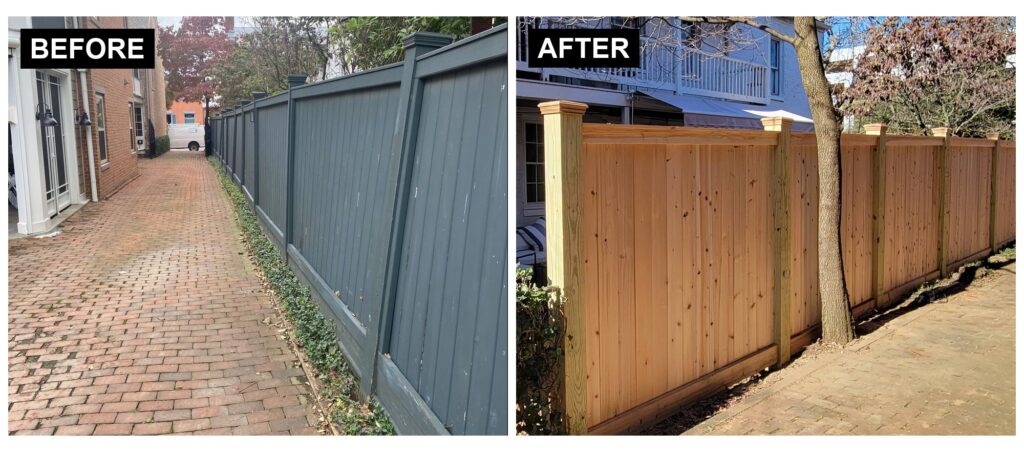 Before and after: a weathered, peeling painted privacy fence replaced with new wood board fencing and decorative post caps.
Repair or Replace? What Each Costs
A few factors determine whether repair or replacement of your fence makes more financial sense:
- Age. A fence older than 10 to 15 years may push your fence repair cost close to the price of full replacement.
- Overhead. One larger project is usually more cost-efficient than several smaller repair visits spread over a few years.
- Scope. If more than a quarter of your fence needs work, replacement is often the better value.
Every fence is different, and it’s hard to make a proper call without seeing yours in person. Request a free quote and get our advice on your specific wood fence repair cost, no obligation.
Schedule Your Fall Fence Repair Now
The Frederick Fence team wants to help you make the right call on your repairs, not just hand you a price. Your sales rep will give you honest advice with your budget in mind.
Wood fence repair costs can double if damage sits through the winter, so now’s the time to call. Request a free quote and we’ll schedule a visit, or shop our Buy Direct page for DIY repair materials at wholesale prices. Already know how to replace fence boards yourself? Our materials team can have everything you need ready to go.